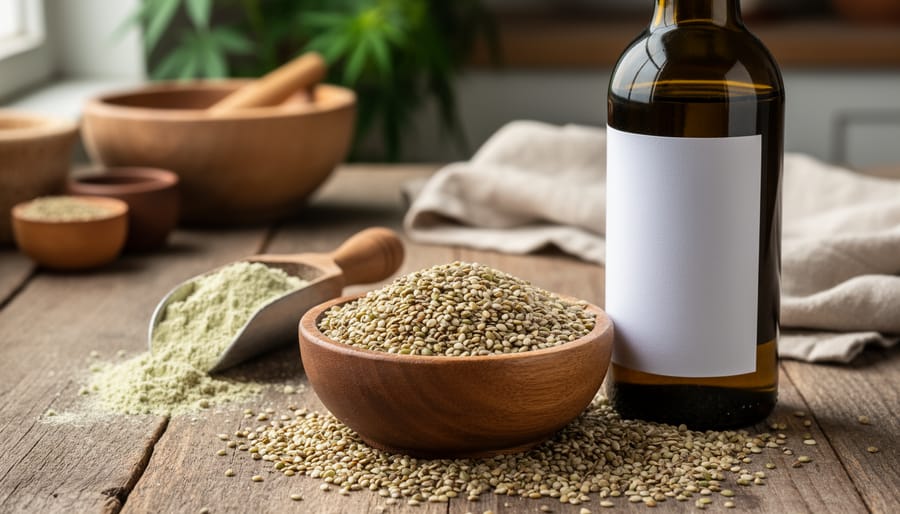

Hemp-derived ingredients in Canadian recipes are culinary products made from the seeds, oil, protein, and hearts (hulled seeds) of industrial hemp plants, legally distinct from cannabis products containing THC. These ingredients have become pantry staples across Canada since 1998, when Health Canada authorized their sale, offering nutty flavors, plant-based protein, and omega-rich oils that chefs and home cooks now fold into everything from Prairie grain bowls to Maritime chowders.
The legal landscape matters here. Industrial hemp contains less than 0.3% THC, the psychoactive compound in cannabis, making hemp seeds and their derivatives entirely non-intoxicating food products. This differs sharply from cannabis-derived wellness products like Exhale Wellness CBD which fall under separate cannabis regulations. For culinary purposes, you’re working with straightforward ingredients: toasted seeds with a texture similar to pine nuts, cold-pressed oil that rivals flax for omega-3 content, and protein powder that delivers all nine essential amino acids.
Canadian chefs have embraced these ingredients with regional creativity. In Saskatchewan, where 40% of the world’s hemp acreage grows, bakeries incorporate hemp hearts into bannock recipes that honor Indigenous grain traditions while adding modern nutrition. Vancouver plant-based restaurants use hemp protein in vegan pâtés. Montreal chocolatiers fold toasted seeds into bark alongside maple and sea salt.
This guide explains what hemp ingredients actually are, how they perform in cooking, the varieties available to Canadian cooks, and where they shine in both traditional and contemporary recipes. You’ll learn storage methods that preserve their delicate oils, flavor pairings that complement their earthy notes, and practical answers to the most common questions about cooking with hemp.
Understanding Hemp-Derived Ingredients
Hemp-derived ingredients are products sourced from the Cannabis sativa plant, specifically varieties cultivated for culinary, nutritional, and wellness applications rather than intoxication. In Canada, the distinction between industrial hemp and cannabis hinges on a simple threshold: the plant’s THC content. Industrial hemp plants may not exceed the 0.3% THC hemp threshold set by federal regulation, while cannabis plants, grown for recreational or medicinal use, contain higher concentrations of this psychoactive compound. This legal boundary shapes what Canadian cooks can incorporate into recipes, separating everyday pantry items like hemp seeds from products that require careful regulatory compliance.
- Industrial hemp
- Cannabis sativa plants bred and cultivated to contain no more than 0.3% THC, making them legal to grow and process for food, fiber, and wellness products without the licensing required for cannabis cultivation.
- Hemp-derived cannabis
- Extracts, isolates, or compounds taken from industrial hemp plants that may include cannabinoids like CBD, used in specialized culinary applications and wellness-focused recipes.
- CBD (cannabidiol)
- A non-intoxicating compound found in hemp plants with no legal limit on concentration in industrial hemp, increasingly incorporated into beverages, sauces, and desserts for its wellness associations.
- THC (tetrahydrocannabinol)
- The psychoactive compound responsible for cannabis’s intoxicating effects, present in trace amounts in industrial hemp products and subject to strict regulatory limits in finished food items.
- Hemp seed
- The edible seed of the hemp plant, also called hemp hearts when hulled, prized for its nutty flavor and complete protein profile in salads, baking, and grain bowls.
- Hemp oil
- Cold-pressed oil extracted from hemp seeds, valued for its omega-3 and omega-6 fatty acid balance, used in vinaigrettes, dressings, and as a finishing oil rather than for high-heat cooking.
The key compounds Canadian cooks encounter fall into two categories. First are the traditional ingredients, hemp seed, hemp grain, and hemp oil, that have appeared in health-conscious kitchens for years without legal complication. These provide texture, nutty depth, and nutritional benefits without any cannabinoid content. Second are CBD-infused products and hemp extracts, which represent a newer frontier in Canadian culinary exploration. While industrial hemp plants can contain unlimited amounts of CBD, finished products must now comply with a 0.4 mg total THC limit per container as of November 12, 2026, ensuring that even trace amounts remain within strict boundaries. This framework allows chefs to experiment with wellness-focused ingredients while maintaining clear legal and safety standards for diners.
How Hemp Ingredients Work in Canadian Cooking
Hemp Seed and Hemp Oil in Traditional Recipes
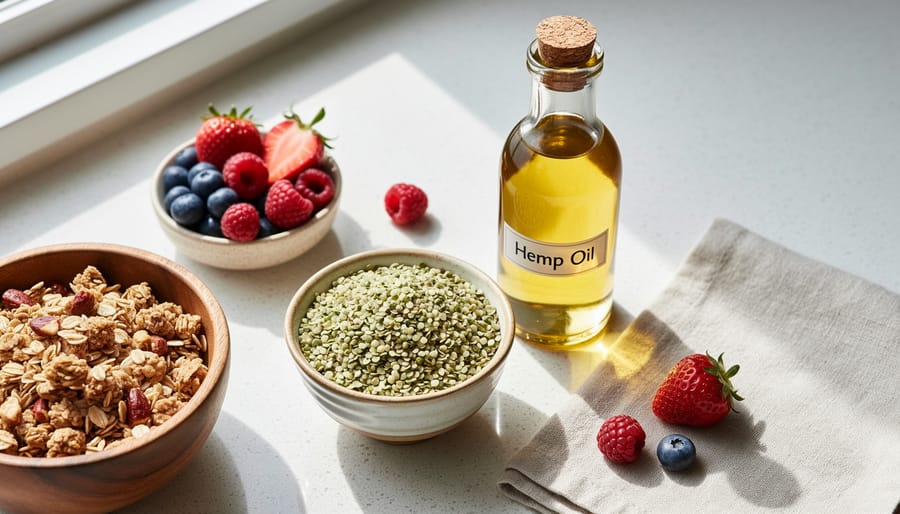
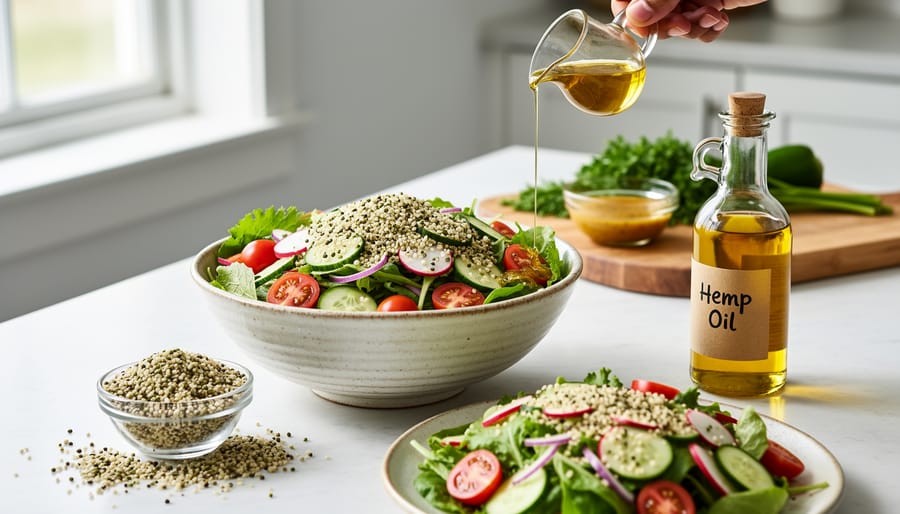
Hemp seed and hemp oil have been staples in Canadian kitchens long before cannabis-derived products entered the culinary conversation. Chefs prize hemp hearts, the hulled seeds, for their mild, nutty flavor and impressive protein content. They appear in grain bowls, smoothie bases, and baked goods where their soft texture adds body without overwhelming other ingredients. A hemp hearts salad demonstrates their versatility: sprinkled over bitter greens, they provide satisfying crunch and a boost of omega-3 fatty acids.
Hemp oil, cold-pressed from the seeds, serves a different purpose. Its low smoke point makes it unsuitable for high-heat cooking, but it excels as a finishing touch. Drizzled over roasted vegetables or whisked into vinaigrettes, it contributes a grassy, slightly earthy note that pairs well with acidic ingredients like lemon or vinegar. The technique of hemp oil finishing allows its delicate flavor to shine through without breaking down under heat. Both ingredients deliver nutrition, complete protein, essential fatty acids, while maintaining the familiar, non-psychoactive profile that has made them welcome in mainstream Canadian cooking for decades.
CBD and Hemp Extracts in Contemporary Cuisine
CBD-infused ingredients have opened a niche for Canadian chefs interested in wellness-focused menus and flavor experimentation. Unlike hemp seeds or oil, CBD extracts allow culinary professionals to introduce cannabidiol’s potential calming properties into dishes without the psychoactive effects of THC. Because Canada’s regulations permit unlimited CBD content in industrial hemp while capping THC at 0.3% in the plant (and 0.4 mg per finished product container as of November 2026), chefs can work with CBD oils, tinctures, and isolates in controlled doses.
In practice, CBD appears most often in beverages, craft mocktails, lattes, and cold-pressed juices, where its slightly earthy, herbal notes complement citrus, ginger, or botanical flavors. Some chefs infuse CBD into sauces for finishing plates, using it as they would truffle oil or herb-infused butter to add a subtle layer of complexity. Desserts offer another canvas: CBD-laced chocolate ganache, panna cotta, or honey drizzles pair the compound’s perceived wellness benefits with indulgent textures.
The key challenge is dosage consistency and flavor balance. CBD can taste grassy or bitter at high concentrations, so chefs typically use it sparingly, treating it as a specialty ingredient rather than a base. As wellness trends continue to shape Canadian dining, CBD remains a tool for chefs aiming to bridge nutrition, innovation, and culinary craft.
Categories of Hemp-Derived Ingredients Available to Canadian Cooks
Canadian cooks working with hemp-derived ingredients encounter a spectrum of products, each with distinct culinary properties and regulatory considerations. Understanding these categories helps both home cooks and professionals navigate what’s available, what’s practical for everyday cooking, and what requires more specialized sourcing.
Whole Hemp Seeds and Hemp Hearts
Hemp seeds, often sold as shelled “hemp hearts,” represent the most accessible and widely used category. These small, nutty kernels appear in nearly every grocery store across Canada, from national chains to regional co-ops. They contain no THC or CBD, the compounds come from the plant’s flowers and leaves, not the seeds, making them straightforward ingredients without regulatory complexity. Chefs value them for their complete protein profile and mild flavor that complements both sweet and savory dishes. Prairie bakeries fold them into multigrain loaves, while coastal cafés scatter them over açai bowls and avocado toast.
Hemp Seed Oil
Cold-pressed hemp oil occupies the middle ground between commodity and specialty ingredient. Better grocery stores and natural food retailers stock it, though it commands a higher price than canola or sunflower oil. The distinctive grassy, nutty flavor works best as a finishing oil rather than a cooking medium, since high heat degrades both flavor and nutritional value. Ontario farm-to-table restaurants drizzle it over roasted vegetables, and Quebec chefs incorporate it into salad dressings where its character can shine.
Hemp Protein Powder
Processed from the seed cake left after oil extraction, hemp protein powder has carved out a niche in wellness-focused cooking. Health food stores carry multiple brands, though it remains a specialty item compared to whey or pea protein. The slightly earthy flavor requires thoughtful pairing, it works in chocolate smoothies and energy balls better than delicate baked goods.
CBD-Infused Products and Hemp Extracts
This category presents the most regulatory complexity. CBD oils, tinctures, and food-grade extracts derived from industrial hemp plants must meet the 0.3% THC plant threshold and, as of November 2026, the 0.4 mg total THC per container limit in finished products. These ingredients remain specialty items available through licensed retailers and online suppliers. Forward-thinking chefs experiment with them in beverages, sauces, and desserts, though accessibility varies significantly by region and the evolving regulatory landscape means sourcing requires attention to compliance and labeling requirements, including allergen declarations on products containing cannabis extracts.
Regulatory Framework: What Canadian Cooks Need to Know in 2026

Canada’s regulatory framework for hemp-derived ingredients balances consumer safety with culinary innovation, and understanding these rules helps cooks navigate what they can legally use in their kitchens. The foundation starts with industrial hemp plants, which are legally defined as cannabis plants containing no more than 0.3% THC, the psychoactive compound found in cannabis. This threshold, consistent with international standards, distinguishes industrial hemp from cannabis intended for intoxication and allows farmers to grow hemp for food, fiber, and oil without the licensing requirements that apply to higher-THC cannabis operations.
For finished products and ingredients, a significant change arrived in late 2026. Under a federal amendment effective November 12, 2026, any hemp-derived ingredient or product must contain no more than 0.4 milligrams of total THC per container. This applies to finished products like hemp-infused oils, CBD tinctures, and prepared ingredients you might purchase for cooking, not to the raw plant itself. The practical effect is straightforward: products exceeding this limit are classified as intoxicating cannabis and require purchase through regulated retail channels, while those below the threshold can be sold as hemp-derived food ingredients through conventional retail and culinary supply networks.
There is no limit on CBD content in industrial hemp plants or products, which explains why you will find hemp hearts, hemp oil, and CBD-infused culinary products with varying CBD concentrations on store shelves. These ingredients offer nutritional and flavor benefits without the regulatory constraints that apply to THC. Traditional hemp ingredients like hemp hearts, hemp seed, and cold-pressed hemp oil fall outside these THC restrictions entirely because they come from the seed, which naturally contains negligible THC, making them as straightforward to use in recipes as any other seed or plant-based oil.
If you work with cannabis extracts in hemp-derived ingredients, such as CBD oils or hemp-derived terpene infusions, an additional allergen labeling requirement applies. Products containing cannabis extracts must declare any food allergens present, just as conventional packaged foods do, ensuring consumers with allergies can make informed choices. For home cooks and culinary professionals, this means checking labels carefully when sourcing ingredients and maintaining the same allergen awareness you would with any specialty oil, extract, or flavoring agent.
Hemp-Derived Ingredients in Regional Canadian Dishes
Canada’s culinary regions are weaving hemp-derived ingredients into their food traditions in ways that reflect both local identity and contemporary innovation. On the Prairies, where hemp cultivation has deep agricultural roots, chefs incorporate hemp hearts into grain bowls that celebrate Saskatchewan and Manitoba’s farming heritage. These bowls layer roasted root vegetables, ancient grains, and toasted hemp seed in burger bowls that add nutty protein alongside bison or lentils. Manitoba restaurants feature hemp oil drizzled over locally milled flour flatbreads, connecting the ingredient to the region’s wheat economy.
West Coast wellness cafés in Vancouver and Victoria have embraced CBD-infused beverages, blending hemp extracts into adaptogenic smoothies with BC berries and sea buckthorn. These establishments frame hemp as part of the province’s health-conscious food culture, though they navigate the 0.4 mg THC container limit carefully in their formulations. Hemp seed also appears in granola at farm stands throughout the Okanagan, paired with dried apricots and lavender honey.
Ontario’s farm-to-table movement showcases hemp oil as a finishing ingredient in seasonal dishes. Chefs in Prince Edward County and Niagara drizzle cold-pressed hemp oil over heirloom tomato salads, squash soups, and grilled lake fish, treating it with the same reverence given to flaxseed and walnut oils. The ingredient’s mild, grassy notes complement the province’s produce without overwhelming delicate flavors.
Indigenous chefs are exploring hemp’s role in both traditional and contemporary contexts. Some incorporate hemp hearts into modern interpretations of pemmican or bannock, while others use hemp oil in dishes that bridge ancestral ingredients with current culinary techniques. References to hemp in Canadian cookbooks reflect this growing interest in regional applications that honor diverse food histories.
Frequently Asked Questions
Can I legally cook with hemp-derived ingredients in Canada?
Yes. Hemp grain, seed, and oil are legal for culinary use in Canada and have been part of Canadian kitchens for years. CBD-infused products and cannabis extracts are also permitted, though they must follow specific regulations including THC limits and labeling requirements.
How much THC is allowed in industrial hemp plants used for cooking?
Industrial hemp plants may not have more than 0.3% THC, and there is no limit to the amount of CBD they can contain. Starting November 12, 2026, finished hemp-derived products may contain no more than 0.4 milligrams of total THC per container.
What labeling is required for cannabis extract products?
Cannabis products containing cannabis extracts must include any food allergens on the label. This requirement helps home cooks and diners make informed choices about ingredients that might affect them.
Are hemp seeds and hemp oil psychoactive?
No. Hemp seeds, hemp hearts, and cold-pressed hemp oil contain negligible THC and will not produce intoxicating effects. These ingredients are valued for their nutty flavor and nutritional profile rather than any psychoactive properties.
When sourcing hemp-derived ingredients for your recipes, look for reputable Canadian suppliers who clearly label their products with THC content and allergen information. Many natural food stores, specialty grocers, and farm-to-table markets now stock hemp seeds, hemp oil, and CBD-infused products specifically designed for culinary use. The key is understanding what you’re buying and how to use hemp ingredients fully in your cooking, whether you’re sprinkling hemp hearts over a grain bowl, drizzling hemp oil as a finishing touch, or experimenting with CBD in a sauce or dessert. Always check labels for the most current information, especially as the November 2026 THC limit takes effect.
Hemp-derived ingredients represent more than a culinary trend in Canada, they’re a testament to this country’s long-standing tradition of embracing innovation while respecting the roots of regional cooking. From Prairie grain bowls enriched with hemp hearts to West Coast wellness cafés experimenting with CBD-infused beverages, Canadian chefs and home cooks are discovering how these ingredients can enhance both flavor and nutrition without compromising the integrity of cherished recipes.
What makes hemp particularly suited to Canadian cuisine is its versatility. Hemp seed adds nutty depth to traditional baking; hemp oil brings delicate, grassy notes to vinaigrettes that complement local produce. Meanwhile, CBD extracts offer contemporary chefs a new dimension for creative expression in everything from craft cocktails to artisanal desserts. These ingredients don’t replace what came before, they expand the palette.
Yet exploration requires responsibility. Understanding the regulatory framework isn’t about limitation; it’s about informed creativity. The 0.3% THC threshold for industrial hemp plants and the 0.4 mg total THC limit per finished product container effective November 12, 2026, provide clear boundaries that ensure culinary experimentation remains legal and accessible. These guidelines protect both cooks and consumers while leaving ample room for innovation.
As you consider incorporating hemp-derived ingredients into your own kitchen, approach them as you would any quality ingredient: with curiosity, respect for their properties, and attention to how they interact with other flavors. Canada’s culinary identity has always been shaped by those willing to thoughtfully blend tradition with possibility. Hemp ingredients are simply the latest chapter in that story.



Leave a Reply